
Howard County 72-Hour Feed Status
No verified Howard County Corrections page shows a rolling 72-hour release roster. The official county navigation offers facility, program, policy, publication, visitor, and contact material, but it does not publish a three-day archive of people who left custody. The Sheriff does not operate the jail. Research of official channels also found no county corrections or sheriff app offering recent releases or booking photos.
There is therefore no official feed URL, update cadence, display rule, or retention term. A 72-hour interval is still useful as a records range. It gives the custodian an exact start and end point, and it allows time for a related court entry to appear. That practical use must not be confused with a county product that does not exist.
The three-day period should be anchored to the completed custody event, not merely the time a judge spoke or paperwork was issued. If the precise event time is unknown, request a slightly broader existing record range and let the county transaction identify which releases actually fit the intended window.
Check Howard County Three-Day Releases
Build a short event timeline before searching. Note the last confirmed custody time, the arresting agency, the booking or arrest date, the court, and any case number. Use full legal name and date of birth when lawfully known. Central Booking processes arrests from several Maryland agencies, so the incident report may belong to the arresting police agency while the booking and release transaction belongs to Howard County Corrections.
- Set a precise 72-hour start and end time. Include the time zone and do not use only “over the weekend.”
- Search Maryland Judiciary Case Search for the person and narrow the result to the correct Howard County court.
- Check Maryland VINELink for a custody event, location, agency, and exact reported status.
- Ask Howard County Corrections for immediate present status. For past confirmation, request the existing booking and release transaction.
- Follow a named receiving agency. Use DPSCS only after a Maryland state transfer, BOP for federal custody, and ICE ODLS for current immigration detention.
This workflow gives each source one role. The court docket explains legal authority. VINE can signal a custody change. Corrections holds the county transaction that can state the effective time, release type, and destination. When the event appears to be same-day, the Howard County 24-Hour Releases process emphasizes immediate bond and discharge timing.
Howard County Weekend Release Checks
A wider date range is most valuable when offices, court entries, and personal checks do not line up on the same day. A court order can exist before physical discharge is complete. Howard County explains that a person ordered released in court must return to HCDC, and the court documents must reach the facility before processing ends. The docket event and the jail exit can therefore fall at different times.
For bond, the District Court Commissioner issues the release papers, which must be delivered to the Detention Center. The county estimates one to two hours after the correct documents arrive. That processing estimate is not a 72-hour feed lag. It explains why the event timeline should preserve both the court action and the later custody transaction.
Holiday or weekend wording should remain exact. Nothing in the researched county material promises that all releases follow one weekend schedule. Extend the requested range across the full days at issue, then ask for the recorded effective release time. An older event may also have a clearer docket trail than it did during an immediate check.
Note: Use exact dates and times in a three-day request so an overnight event is not lost at an informal weekend boundary.
Howard County 72-Hour Record Fields
The fields below describe what to request from the county’s existing custody system. They are not fields from an online 72-hour list. Some data may be redacted or withheld under a lawful exemption. Asking for the releasable remainder keeps the request focused while preserving the details needed to distinguish discharge from transfer.
| Field | Why it matters in a three-day review |
|---|---|
| Booking or admission number | Separates one custody episode from an earlier Howard County event. |
| Admission date and time | Anchors the beginning of the county custody period. |
| Release date and time | Places the completed transaction inside or outside the requested window. |
| Release authority or category | Identifies bond, time served, court action, or another basis. |
| Disposition or destination | Shows community release, detention placement, or transfer to another agency. |
| Case and charge references | Connects the custody event to the correct court docket. |
The most useful record includes both time and destination. A date alone cannot explain where the person went. “Release to DPSCS,” “release to ICE,” or pickup on another jurisdiction’s detainer ends Howard County’s custody but does not establish freedom. A detainer is a request or legal basis for another authority to take custody.
Note: A release category without its destination is not enough to distinguish community discharge from transfer to another custodian.
Request Howard County 72-Hour Records
Submit a focused request through the Howard County Public Information Act route. Ask for existing records sufficient to show releases from the Howard County Detention Center between the exact start and end times. Request releasable booking number, effective release time, release type, and disposition or destination. Ask for an electronic export if one already exists, and make clear that the request does not seek a new narrative or analysis.
Maryland General Provisions §4-202 covers written applications and the agency’s response to a misdirected request or nonexistent record. Section 4-203 requires prompt action and generally sets a 30-day outside period. If the work will exceed ten working days, the custodian must provide an estimated time, fee range, and reason for delay within ten working days. These are formal record-response rules, not live custody-service times.
For one person, include lawful identifiers, the approximate booking date, and the court case number. Ask for admission and release fields together. If the agency says the record no longer exists, ask whether it was moved to archives or destroyed under a named retention schedule. Howard County publishes no retention promise for a nonexistent web feed.
Howard County Release Status Paths
A three-day search often begins because a person is no longer visible in a current check. That absence is not a release status. The DPSCS Incarcerated Individual Locator is designed for people currently in covered Maryland state custody. DPSCS says people no longer in custody for any reason, including release or escape, are not listed. A county-only detainee may never appear in that state system.
- Community release
- The county record shows an authorized exit such as bond, recognizance, time served, or a court order, with no receiving custodian named.
- Transfer
- Howard County’s custody ends because DPSCS, another county, USMS, BOP, ICE, or another authority receives the person.
- Home detention
- Physical placement changes, but legal custody or program limits may continue.
- Discharge
- A custodial or supervision term ends under the controlling record. It should not be inferred from a blank search.
VINE is well suited to an event signal but not to a certified time and destination. Case Search may show the disposition or order, though Maryland Judiciary states that the public display is only a summary. The county custody transaction remains the strongest source for what happened at the Howard County facility.
No Howard County Release Archive
The local data quirk is the archive’s absence. The Howard County Corrections site and its publications and links do not expose a verified rolling 24-hour or 72-hour release page. Without a published feed, there is no defensible refresh rate, lag estimate, public field list, or automatic expiration point.
The county’s Detention Center questions page is still useful for official custody and contact context.
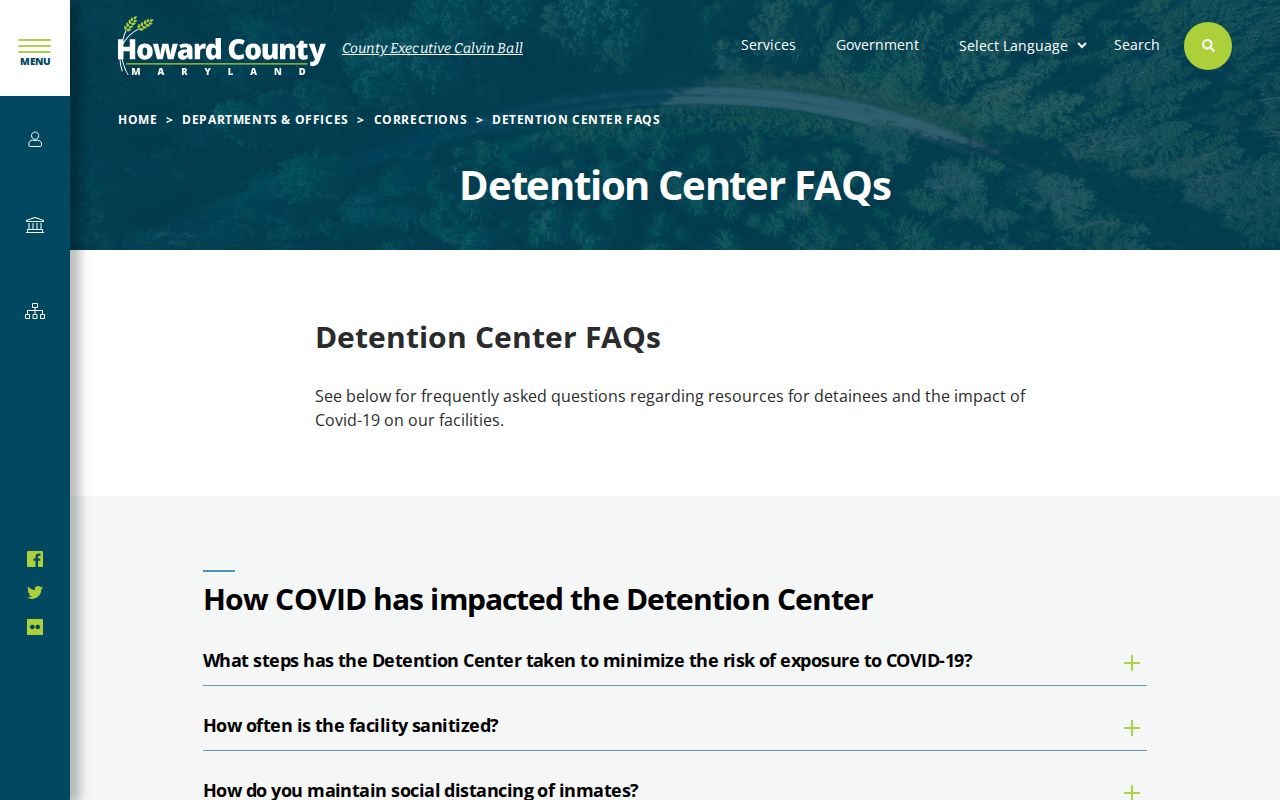
The official page provides county context, while a date-bounded MPIA request supplies the durable record for an older event. For one named person, the Howard County released inmate lookup adds court, state, federal, and supervision routes without pretending that a rolling archive exists.
Older events may also disappear from public court display after expungement, shielding, sealing, or rules affecting some non-conviction matters. That later absence does not establish that no arrest or release occurred. Save lawful personal paperwork and ask the county whether the underlying booking record still exists under its retention schedule.
A three-day review is strongest when each source is dated. Record when VINE was checked, when the court entry appeared, and which interval the records request covers. That timeline makes a later correction easier to reconcile.
Note: No refresh or retention rule can be assigned to a Howard County release archive that the county does not publish.