
Howard County Parole and Probation
Maryland separates the agency that decides parole from the agency that supervises people in the community. The Maryland Parole Commission decides, case by case, whether an eligible person serving a qualifying state or local sentence is suitable for conditional release. The DPSCS Division of Parole and Probation, called DPP, supervises parolees, probationers, and people released under mandatory supervision. Howard County Corrections does not replace either state role.
Probation comes from a court order. It may follow confinement, accompany a suspended sentence, or be imposed without a prison term. Parole is conditional release from confinement while the sentence continues. Mandatory supervision can begin when diminution credits, which are earned sentence deductions, produce release before the maximum expiration date. These labels affect which record and office should be checked.
| Status | Who authorizes it | What to verify |
|---|---|---|
| Parole | Maryland Parole Commission | Commission outcome, effective release, and DPP supervision |
| Probation | District or Circuit Court | Court order, term, conditions, and DPP routing |
| Mandatory supervision | Sentence and credit law | Custody discharge record and active supervision status |
- Parole
- Conditional community release while a sentence remains active.
- Probation
- Court-ordered supervision that may follow custody or a suspended sentence.
- Discharge
- The formal end of the supervision status shown by the responsible agency or court.
- Absconding
- Willfully evading supervision, not merely missing one appointment.
Check Howard County Release Supervision
No verified Maryland portal provides a universal public probation name search. A DPSCS incarcerated-person result also answers a custody question, not whether someone reports to a DPP officer after release. Verification therefore begins with the legal source and moves to the state supervision office. Use exact case or correctional identifiers whenever they are lawfully available.
- Check Maryland Judiciary Case Search for the Howard County case, sentence, probation order, and later public docket entries.
- If parole is claimed, consult the Maryland Parole Commission. A hearing or recommendation is not the same as an effective release.
- Use the DPSCS office locator or DPP directory to identify the Howard County supervision office.
- Provide the person’s full name plus the case or DPSCS number. Ask only for information the agency is allowed to disclose.
- Compare any answer with the custody release record. Probation or parole status does not supply the physical jail exit time.
The Howard County released-inmate search and record path explains how to obtain the underlying county release transaction. That record helps distinguish a community release from transfer to DPSCS, another jurisdiction, or federal custody.
Note: A person absent from a current jail or DPSCS locator is not automatically released, discharged, or free of another hold.
Howard County Supervision Office Route
DPP’s researched directory lists two Howard-related functions at the District Court Multi-Service Center. The contacts route inquiries; they are not a public name-search service. Office information can change, so confirm the current listing before visiting and do not expect staff to release protected details about a person’s agent, schedule, or conditions.
DPSCS Division of Parole and ProbationDistrict Court Multi-Service Center
3451 Courthouse Drive
Ellicott City, MD
West Regional Office: 410-480-7808
Ellicott City Field Office/DDMP: 410-480-7920 or 410-480-7800
The official DPP office directory is the controlling source for current routing. DPP may confirm only what law and policy permit. The Maryland Parole Commission holds parole decision records, while the sentencing court holds the probation order. One office should not be asked to certify another agency’s event.
Howard County Violations and Warrants
Conditions vary by order and case. A violation allegation may lead to a warrant, hearing, modification, revocation, or other action, but the allegation is not itself a final result. Maryland law defines absconding as willfully evading supervision and expressly excludes one missed appointment. Avoid turning rumor, a missed visit, or a stale online entry into a claim of absconder status.
Public court entries may show a warrant or violation proceeding. The Howard County Sheriff’s Warrant/Fugitive Section serves warrants, but its page is not a public wanted-person database and the Sheriff does not operate the jail. VINE materials describe certain parole and probation notifications, including an agent change or violation-hearing result. Those notices are event alerts, not the full supervision file.
Howard County Supervision Discharge
Supervision ends through the legal mechanism that controls the case. A probation term may expire or be discharged by the court. Parole or mandatory supervision continues under the sentence and agency record until its lawful end, modification, revocation, or discharge. The end of active reporting should not be guessed from the original jail release date.
Maryland also provides earned compliance credits in qualifying cases. Correctional Services §6-117 describes a reduction of active supervision or home detention for each compliant month under its terms. Exclusions apply, and movement to abatement does not necessarily erase the underlying legal expiration or every duty. The DPP record and court order remain controlling.
For documentary proof, request the specific discharge or supervision record from its custodian. Maryland’s Public Information Act starts from access to existing records but allows required and discretionary withholding. A narrow request should identify the person, case, agency, and date range, accept redaction, and ask for the legal basis if material is withheld.
Note: A supervision discharge date and a Howard County physical release date are separate events and may be held by different agencies.
Howard County Release and Reentry
Howard County Corrections documents programs that span custody, alternatives, and preparation for release. Its Corrections programs page describes work and home detention plus treatment and reentry-related services. These county functions must be kept distinct from DPP supervision. A person in home detention may remain in a county correctional status, while a person on parole or probation is supervised through the state structure.
The county capital plan also identifies a modular building for reentry and incarcerated-person training as part of work at the Detention Center. That local landscape makes the sequence important: identify whether a program is in-facility, an alternative custody placement, a release service, or formal state supervision. Similar names do not create the same legal status.
A clean verification chain reads: county custody or alternative program, physical release or transfer, then any court-ordered or state supervision. When records conflict, use the date and exact status on each source rather than forcing them into one event. Howard County Corrections can certify its transaction; DPP and MPC control their own supervision records.
Howard County Parole Decision Records
Parole eligibility is only permission for consideration. Under Correctional Services §7-301, the ordinary baseline for a qualifying Maryland sentence of six months or more is one-fourth of the aggregate sentence, but mandatory terms and special offense or sentence categories can change that point. Eligibility does not promise approval or a release date.
The Maryland Parole Commission publishes an open-hearing master list and also holds administrative public meetings. Those are different schedules. The Commission’s every-other-Wednesday administrative meeting is not every person’s parole hearing. Hearings may occur through institutional videoconference, and a hearing examiner’s recommendation can be reviewed within the Commission process.
The MPC FAQ describes main outcomes as refuse, rehear later, or approve release. Even an approval does not certify the instant a person leaves a Howard County or DPSCS facility. Final processing, other holds, and receiving-agency action can still matter. Use the exact decision term, then seek the custody release transaction and DPP routing.
The Maryland Parole Commission FAQ is the official source for those outcome terms and the distinction from mandatory release.
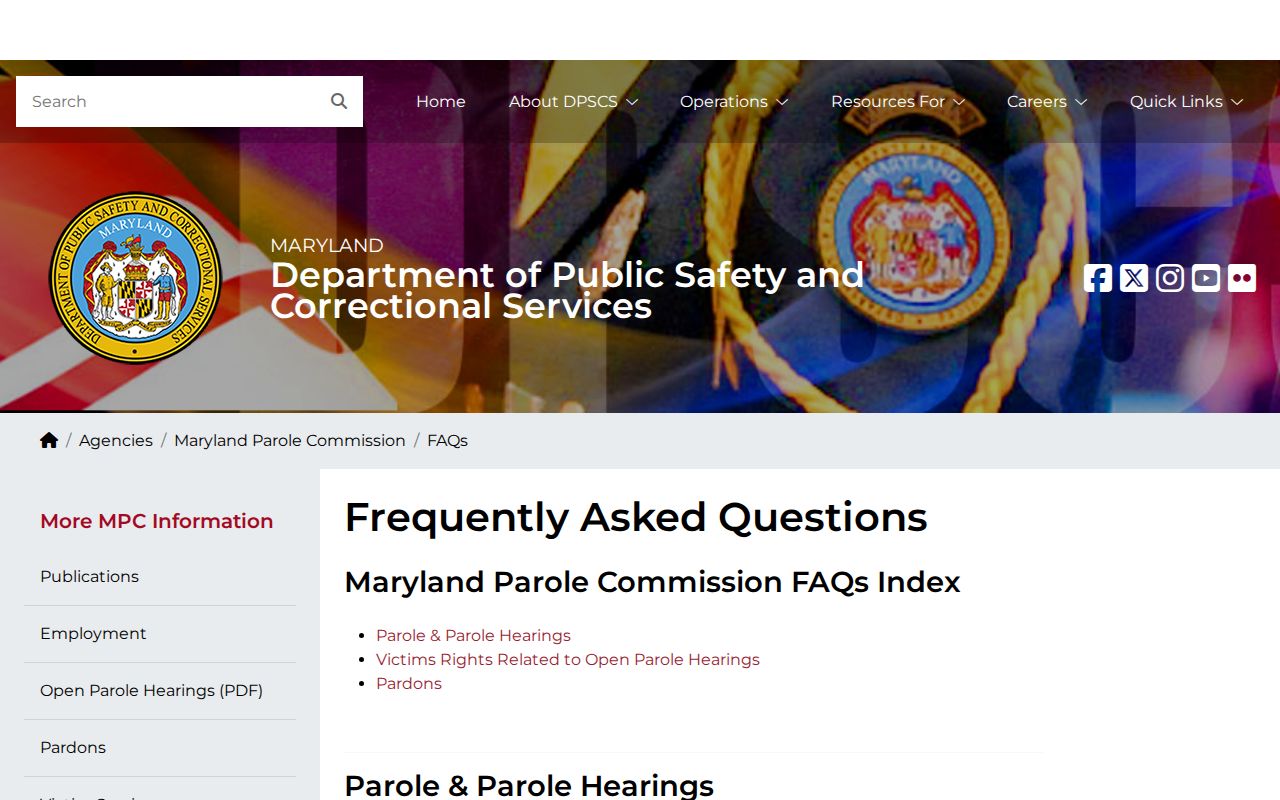
The image supports careful use of the Commission’s labels rather than treating every outcome as an immediate Howard County release.
Note: A parole approval or hearing result still needs a separate effective release event and the correct supervision record.
Maryland VINE may provide a parole-related notice, but no open public MPC decisions-by-name database was verified. A written decision may require a focused MPC or DPSCS request, subject to privacy, victim, and security limits.
Howard County Supervision Records
Each agency documents its own part of post-release supervision. The sentencing court holds the probation order and public docket. MPC holds the parole decision process. DPP holds the community-supervision record, while Howard County Corrections holds the local custody release or transfer transaction. A request should go to the custodian that created the event instead of asking one office to reconstruct the entire chain.
Maryland VINE can bridge those systems with certain parole and probation notices. State materials identify release, transfer, supervising-agent change, and violation-hearing results among covered supervision events. Registration is record specific, however, and a person entering supervision may require a new registration after local or state custody. An alert remains a notice, not the complete decision or discharge record.
Under Maryland’s Public Information Act, request existing records with the person’s full name, case or DPSCS identifier, agency, and a focused date range. Accept lawful redaction and ask for the basis of any withholding. Supervision files can contain protected personal, victim, safety, and agent information, so public access may be narrower than access to a court docket.
For the most reliable timeline, record four separate dates when available: physical release, supervision start, any modification or violation event, and formal discharge. Those dates may differ. Keeping them separate prevents a Howard County jail release from being mistaken for the end of the sentence or the end of state supervision.