
Howard County Projected Release Dates
A projected date is an agency calculation based on the sentence information available at that time. An actual release is the physical custody transaction after staff confirm the order, credits, holds, property, and destination. Those dates can differ. A court’s sentence entry supplies legal terms, but it does not certify the day or time a person crosses the facility door.
Pretrial detention has no fixed sentence-expiration date. Release may depend on bond, recognizance, dismissal, a later court order, or resolution of the case. A sentenced person may have a computed date, yet the figure can move after credit correction, disciplinary action, parole, a new order, or another agency’s hold.
- Projected date
- A calculation that can change before discharge.
- Maximum expiration
- The sentence endpoint before any distinct lawful effect described by the record.
- Diminution credit
- A statutory deduction for qualifying conduct, work, education, or projects.
- Detainer
- A request or hold from another authority that may change the destination.
Find Howard County Release Dates
Start with the custody system. Howard County Corrections performs sentence computation for local confinement. DPSCS computes dates for state commitments. The public DPSCS tool is titled the Incarcerated Individual Locator and is designed for people presently in covered custody. Research did not verify a guaranteed public projected-date field, so no date label should be promised.
- Find the Howard County court case and read the sentence, commitment, and credit entries.
- Determine whether custody is local, state, federal, or with another jurisdiction.
- For a local sentence, ask Howard County Corrections for the sentence-computation or release record.
- For a state commitment, check the DPSCS incarcerated-person locator and preserve any live date label exactly.
- If the public result has no date, request the responsible agency’s record rather than calculating one from a generic formula.
- Check for parole action, new warrants, detainers, or a court modification.
The Howard County released-inmate record process gives the county request route. Ask for existing records that show the computed date, credits, release type, and destination. Do not ask the custodian to create a prediction.
Note: No DPSCS result can prove that a person booked only in Howard County has been released.
Maryland State Release Credit Rules
Maryland uses specific credit statutes, not one broad percentage. For a state sentence, Correctional Services §3-704 generally awards good-conduct deductions in advance at ten days per calendar month, prorated for part months. The provision describes five days per month when the term includes a consecutive or concurrent sentence for a statutory crime of violence or specified controlled-substance offense.
Sections 3-705 through 3-707 address other qualifying work, education, and special-project credits. Credits can be revoked and, in some circumstances, restored. Section 3-711 limits their effect for specified sentences and offenses. The actual calculation therefore depends on the sentence, offense category, credit history, and agency record.
Maryland does not impose a universal rule that every person serves exactly 85 percent. Applying a federal-style 85-percent shortcut to every Howard County case would ignore the state credit provisions and parole rules. For covered violent offenses, §7-301 contains a distinct parole-eligibility threshold. Eligibility for consideration is not a projected discharge date and does not guarantee release.
The source image from the DPSCS locator explanation shows that the public tool concerns current custody.
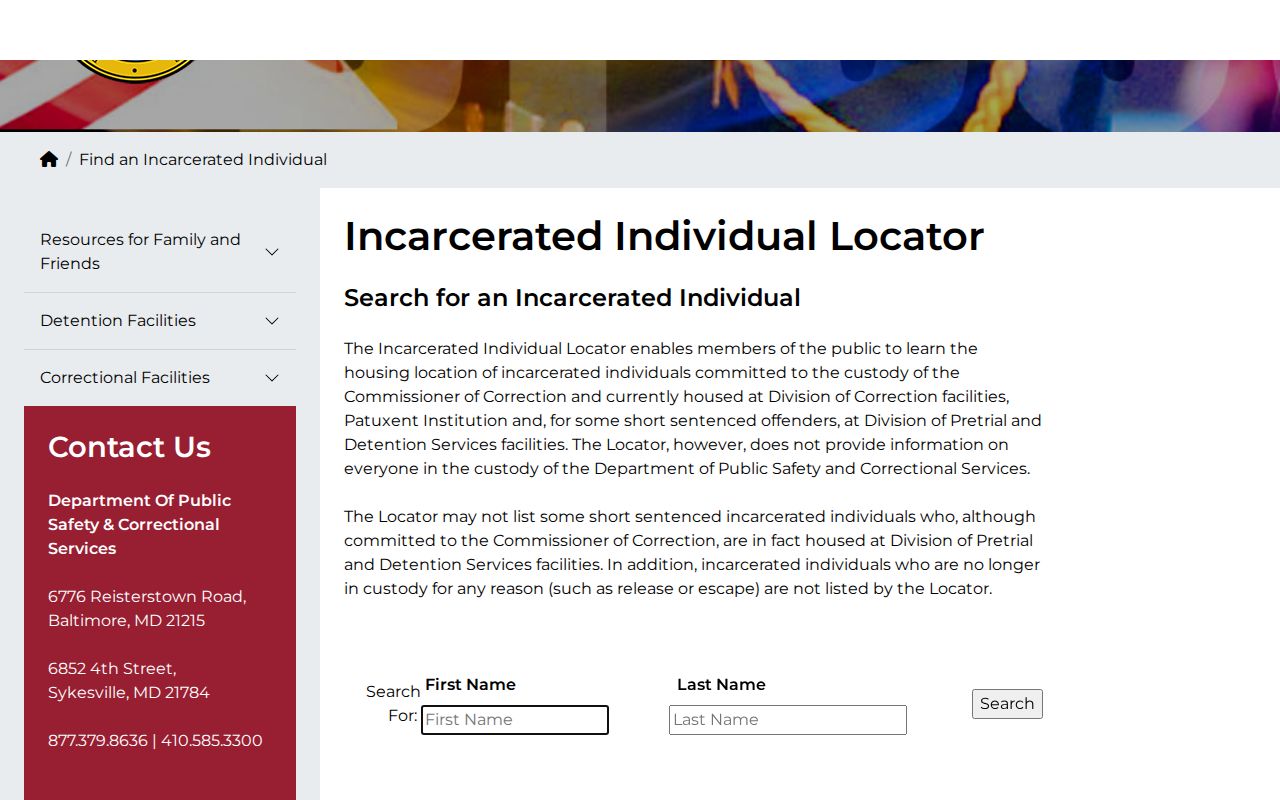
The official wording is why an absent result cannot serve as a historic discharge date or a county sentence calculator.
Howard County Local Release Credits
Local confinement follows a different statutory framework. Correctional Services Title 11, Subtitle 5 governs eligible deductions in local facilities. Section 11-502 sets eligibility and exclusions. Sections 11-503 and 11-504 concern presentence and postsentence good-conduct credits, while §§11-505 and 11-506 address qualifying work or project credits. Section 11-507 provides for revocation through a due-process procedure.
Criminal Procedure §6-218 separately requires credit for qualifying time already spent in custody. That presentence credit can be essential when the sentence is entered after weeks or months of detention. A court docket’s nominal term, viewed alone, does not reveal all credit that Howard County administration must use.
Section 11-503 provides five days per month of presentence good-conduct credit, prorated, from arrival until local sentencing, commitment to DPSCS, or release. The local and state schemes should not be mixed. A transfer to DPSCS changes the computing authority and may start a different record chain.
Howard County Date Changes
A date can move forward or backward as lawful inputs change. The reason should be identified from the agency or court record, not guessed from the size of the change. One event may also end Howard County custody while beginning custody elsewhere.
| Factor | Possible effect | Where to verify |
|---|---|---|
| Credit correction | Recalculates time remaining | Sentence-computation record |
| Discipline | Revokes or restores credits | Custody agency |
| Work or education | Adds qualifying credit | Custody agency |
| Court modification | Changes sentence structure | Howard County court file |
| Parole action | Grants, denies, or defers conditional release | Parole Commission |
| New case or detainer | Continues custody or changes destination | Holding and receiving agencies |
| Data correction | Fixes a system entry | Responsible records office |
Concurrent and consecutive terms also matter. So do escape time not credited and newly imposed time. A person can reach one computed release date yet move directly to another jurisdiction. That is a transfer, not an ordinary community discharge.
Howard County Court and Parole Dates
The court docket supplies the sentence and later public changes, not the final agency computation. Read whether terms are concurrent or consecutive, whether qualifying presentence custody credit was ordered, and whether the sentence was modified. A docket can lag the correctional system, while a correctional display can lag a newly filed order. When they differ, ask the clerk for the complete case file and ask the custody agency for its current computation.
Parole eligibility adds another date that is often mistaken for release. Under Correctional Services §7-301, the ordinary baseline for an eligible Maryland sentence of six months or more is consideration after one-fourth of the aggregate sentence. Mandatory portions, covered violent offenses, repeat controlled-substance sentences, and life sentences have different rules. Eligibility allows consideration only. The Maryland Parole Commission may refuse parole, set a later rehearing, or approve conditional release.
A hearing date, recommendation, or approval still does not establish the physical exit. Commission review, institutional processing, release planning, and other holds can remain. If parole is approved, compare the final Commission action with the DPSCS or Howard County release transaction and the DPP supervision route. Mandatory supervision is also distinct from a discretionary parole grant, even though both can place a person in the community before maximum expiration.
Howard County probation is different again. A court may impose probation without a prison term or after a period of confinement. A probation start date may align with release, but it is not a sentence-computation field. Use the court order and DPP record to understand supervision while using Corrections or DPSCS for the custody release date.
Howard County Weekend Release Dates
Howard County publishes a distinctive rule for weekend sentences. The sentencing judge’s commitment specifies the report and discharge time. The county says weekenders receive five days of good time per thirty days, prorated for shorter periods, and Intake posts release dates on Fridays. This operational practice applies to the weekend sentence described by Corrections.
The Howard County Corrections programs page is the source for the local weekender process. It should not be expanded into a rule for all detainees. A pretrial person, full-time local sentence, or state prisoner follows a different route.
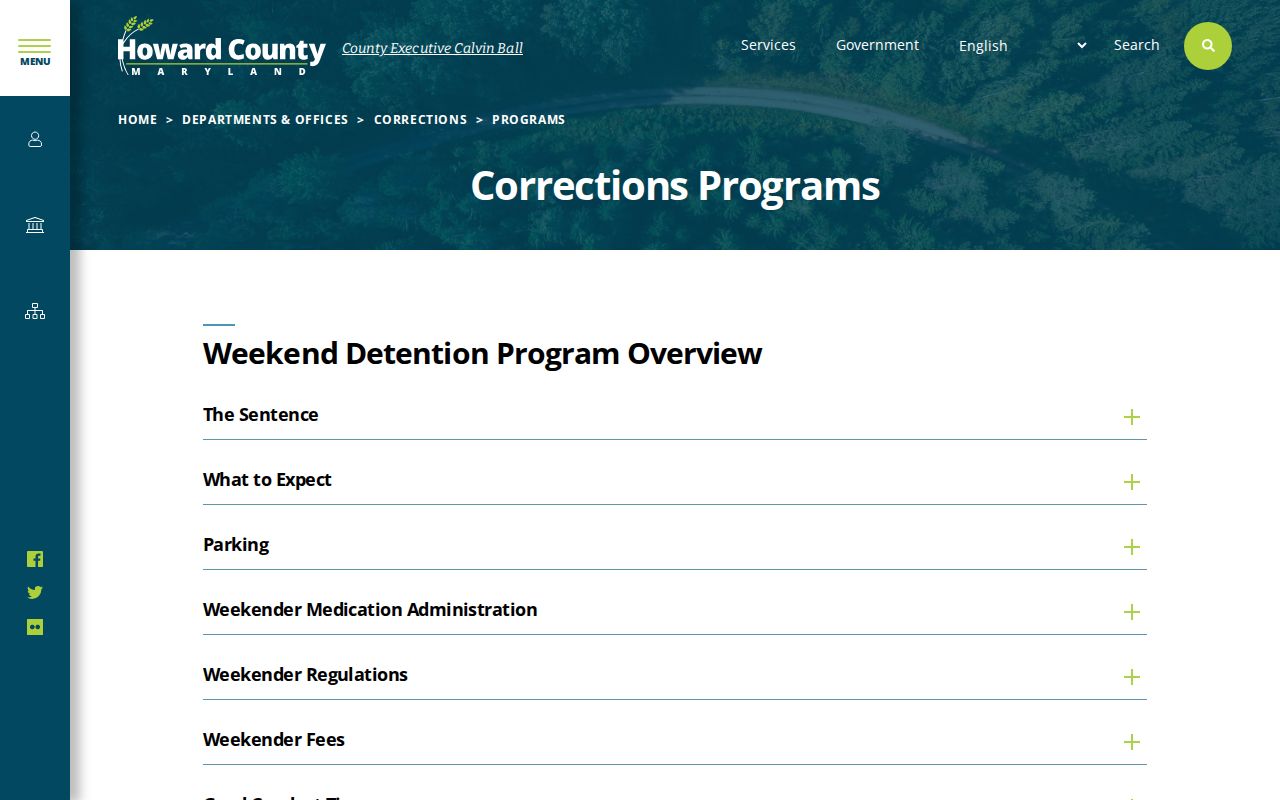
The county program image anchors this narrow operational rule to Howard County rather than a generic Maryland release formula.
Weekend confinement also shows why a general online calculator is unsafe. The commitment’s exact terms, local proration, time already served, and Intake computation all matter. The judge’s schedule may identify the expected discharge time, but staff still verify the controlling paperwork and any new hold before release.
Note: The Friday posting practice applies to Howard County weekend sentences and should not be extended to other local or state release calculations.
Confirm Howard County Release Dates
For a pending local release, confirm the computation through Howard County Corrections. For state custody, use DPSCS. Register through the Howard County VINE inmate check when an event notice would help, but do not treat the alert as the agency’s final calculation sheet.
Howard County says most time-served discharges occur around 8:00 a.m., yet it will not provide a pending time-served date by telephone. Family must obtain that information from the incarcerated person. Bond and court releases follow different paperwork paths, so the same local timing does not apply.
A completed release record should show the effective date and time, type or legal authority, and destination or receiving agency. Compare it with the court event and any VINE notice. If the destination is DPSCS, another county, USMS, or ICE, follow that system. The person has left Howard County custody but may not have entered the community.
Note: The agency computation remains controlling even when a public result, court estimate, or personal calculation suggests another day.
Request Howard County Date Records
When no reliable date appears online, request the existing computation from the correct custodian. For a Howard County local sentence, identify the Detention Center admission, court case, sentencing date, and approximate custody period. Ask for records showing the sentence inputs, qualifying credits, computed release date, later adjustments, and completed release disposition if the event has occurred.
A state commitment belongs with DPSCS. Its public locator may confirm present custody, but the researched official material does not guarantee a projected or mandatory release date field. If a live result displays a date, keep its exact label. If it does not, use the DPSCS public-information process rather than inferring a date from sentence length.
The Maryland Public Information Act governs requests for existing records. A focused request can ask for electronic delivery, accept redaction, and seek a fee estimate before costs pass a stated amount. If the record is withheld or no longer exists, ask for the legal basis or the retention schedule relied upon. The custodian need not create a new calculation or narrative.
After production, compare the computation with the court file and any VINE event. A court modification may explain a change, while the custody record shows how staff applied it. If the disposition names another authority, the date ends Howard County custody but does not establish community release.